Biodesign Academy · Open
Open tools and papers
Free tools, open papers and data for designers working with proteins and living matter.
Part of Biodesign Academy. Courses and Readings live at biodesign.academy.
We try to keep care and fairness inside the work, not added afterwards.
Tools
Free, open source and run in your browser. Each one cites the paper that explains its method.
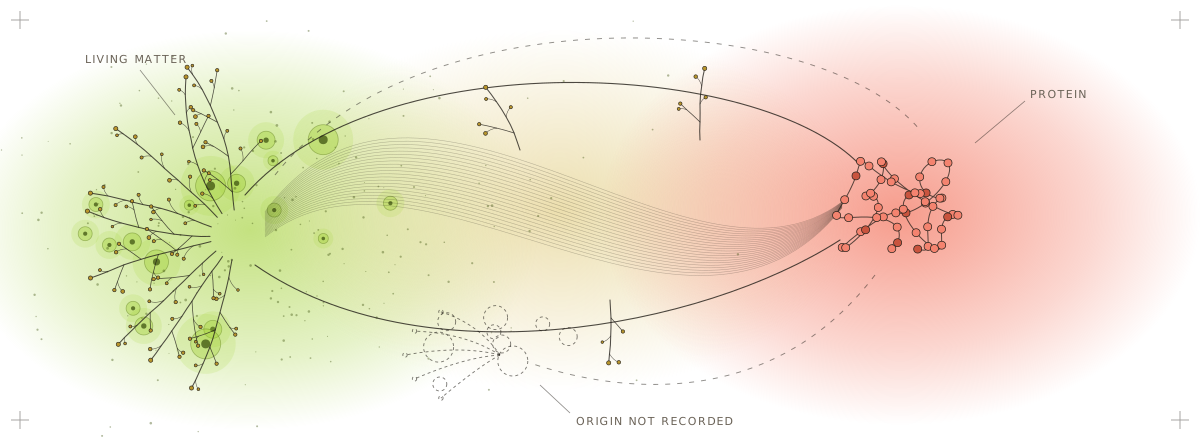
ProteinBackstory
Where your protein came from, and who it's owed to.
Paste a UniProt protein ID and draft a provenance note: the organism, where and when it was collected, who recorded it, what is missing, and who it may be owed to. Nothing is sent to us.
- Free
- Runs in your browser
- MIT licence
- v0.2
How we work
Three habits run through everything we publish.
-
Facts from the records
What our tools state comes from public records, with sources. Nothing is guessed, and AI suggestions stay leads until a person checks them.
-
Gaps named honestly
"Not recorded" is a result. A gap stated plainly is a list of things someone could go and find out.
-
Credit, and what goes back
Living matter comes from places and people. We name them where we can, and ask what goes back.
Papers and data
Open papers, reports, data and software on Zenodo, free to read and cite. Each has its own DOI.
Protein Backstory: Provenance Notes for Biodesigners
An open note and a free tool for recording where a protein came from, who it may be owed to, and what goes back.
doi:10.5281/zenodo.24441516 Paper and data · 2026Unresolved Companions, Snapshot 0
Organisms used in biodesign whose protein shapes are not yet worked out: a dated baseline for mycelium and bacterial cellulose.
doi:10.5281/zenodo.24432444 Working paper · 2026AI-native biodesigner: a definition and a three-question test for biodesign education
What a good biodesigner needs when AI tools are this fast: judgement, fluency and care, with a test teachers can use as a learning outcome.
doi:10.5281/zenodo.24062013 Policy brief · 2026Data centres, AI, and living matter: recommendations for EU minimum performance standards
Heat reuse for growing living matter, water stress judged by what rivers need, and letting users see the data centres behind their tools.
doi:10.5281/zenodo.23642473 Dataset · 2026Biodesign Protocol Provenance Dataset, Trace 01: Citrate in Bacterial Cellulose Growth Media
How citric acid and citrate are specified in bacterial cellulose recipes across primary sources, and who cites whom.
doi:10.5281/zenodo.21985658 Technical note · 2026Evaluating Molecular Trust: State–Provenance Alignment in Bio-Digital Systems
Why a molecule that still reads correctly may no longer match its claimed history, and how to reason about the gap.
doi:10.5281/zenodo.20640517 Report · 2026Trusted Molecular Memory: Investigating Molecular Trust in Hybrid Bio-Digital Systems
With Thomas Heinis and Larissa Pschetz. Molecular trust as procedural and institutional, not only object-bound, with a molecular chain of custody.
doi:10.5281/zenodo.19002474 Software · 2025Biodesign Vocabulary Game
A matching game of 72 term pairs that pairs biology concepts with design analogies, for learners and teachers.
doi:10.5281/zenodo.16790912 Workshop report · 2025AlphaFold Futures Workshop Report
The report from our AlphaFold Futures workshop on protein structure prediction for designers.
doi:10.5281/zenodo.16755847Want to learn to use tools like these? The six-week course AI-Native Biodesign: With Proteins and the weekly Readings From the Molecule Up live on our main site. Go to biodesign.academy